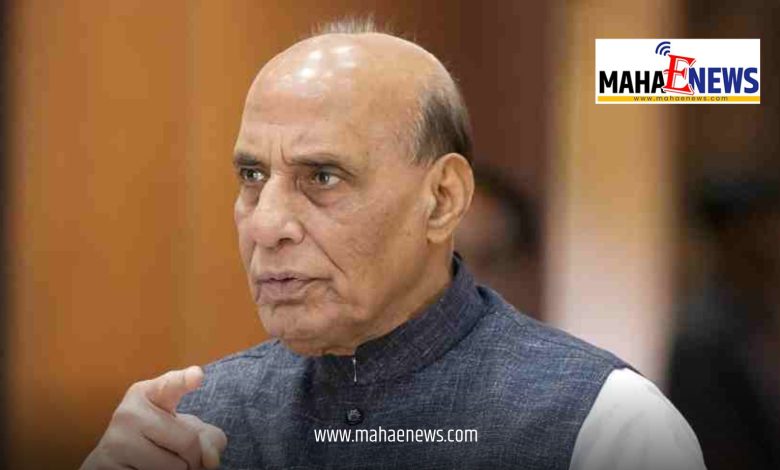
Rajnath Singh Says Borders Can Change, ‘Sindh May Return to India in the Future’
Defence Minister Makes Major Statement at Sindhi Community Convention Amid India–Pakistan Tensions
New Delhi:
In a strong and politically significant remark, Defence Minister Rajnath Singh on Sunday said that although Sindh is not part of India today, geographical boundaries can change, and the region may return to India in the future.
He was speaking at the ‘Sindhi Samaj Sammelan’ held in New Delhi. His comments come at a time when India–Pakistan relations remain tense following the ‘Operation Sindoor’ conflict earlier this year, making the statement even more impactful on the international stage.
“Sindh Has Always Been Part of India Culturally”
Rajnath Singh said:
“Today, Sindh may not be geographically a part of India, but from a civilizational perspective, it has always belonged to India. And as far as land is concerned—borders can change. Who knows, Sindh may return to India one day.”
Sindh, once a part of undivided India before 1947, is now a province in Pakistan. It is also the birthplace of Sindhi culture and the Indus Valley Civilization. A large part of the Sindhi Hindu community migrated to India after Partition and continues to retain strong emotional ties to the region.
Reference to L.K. Advani
The Defence Minister made a special mention of BJP veteran L.K. Advani, himself originally from Sindh. Singh highlighted the deep emotional connection Sindhi Hindus still feel for their homeland.
He said Advani had written in his book that many Sindhi Hindus of his generation have still not accepted that Sindh is no longer part of India.
Significance of the Indus River
Rajnath Singh also spoke about the sacredness of the Sindhu (Indus) River, saying that both Hindus and many Muslims had historically considered its water holy.
Quoting Advani’s writings, he added:
“In Sindh, many Muslims believed that the water of the Sindhu was even more sacred than the ‘Aab-e-Zamzam’ of Mecca.”
His remarks are being closely watched for their geopolitical implications, especially considering the current state of India–Pakistan relations.