Indrayani and Pavana Rivers to Become Pollution-Free; ₹826.62 Crore Mega Action Plan Announced
Pune Metropolitan Region Development Authority (PMRDA)
-
30 villages along the Indrayani river including Dehu–Alandi and 54 villages along the Pavana river included
-
Integrated solutions for sewage, solid waste, environmental and religious pollution
-
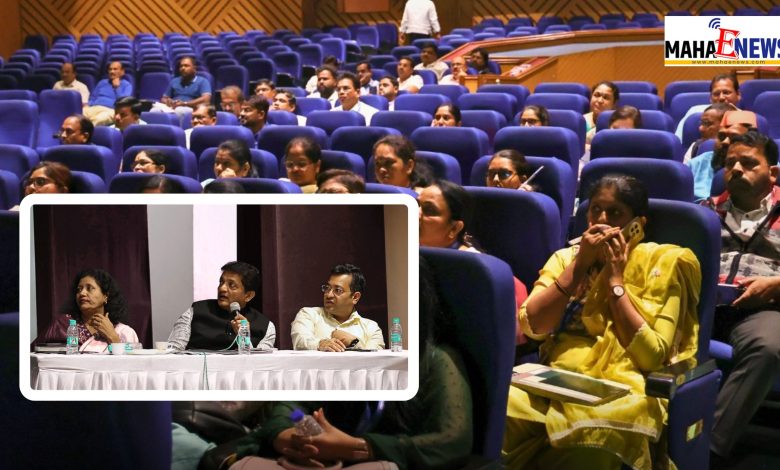
Detailed project presentation made to representatives of beneficiary villages at Pandit Bhimsen Joshi Kalamandir, Aundh
Pune: The Pune Metropolitan Region Development Authority (PMRDA) has prepared a comprehensive and long-term river rejuvenation plan to make the sacred Indrayani River, which flows through pilgrimage towns like Dehu and Alandi, and the Pavana River, the lifeline of Pimpri-Chinchwad, pollution-free.
The total project cost is ₹826.62 crore, of which ₹674.13 crore is allocated for the Indrayani River and ₹152.49 crore for the Pavana River. The project will be implemented through joint funding by the Central and State Governments.
The primary objective of the project is to prevent untreated sewage, solid waste, and pollution caused by religious activities from entering the rivers and to restore their natural ecological health. A detailed presentation of the projects was made on December 18, 2025, at Pandit Bhimsen Joshi Kalamandir, Aundh, in the presence of sarpanchas, deputy sarpanchas, gram development officers, and city engineers from the beneficiary villages.
The event was attended by Metropolitan Commissioner Dr. Yogesh Mhase, Additional Metropolitan Commissioner Deepak Singla, Chief Engineer Rinaz Pathan, Superintending Engineer Prashant Patil, Executive Engineer Anita Kulkarni, Deputy Engineer Vivek Vispute, officials from the Maharashtra Pollution Control Board, MIDC, Maharashtra Jeevan Pradhikaran, and Zilla Parishad.
Indrayani River Project
The Indrayani River has a total length of 105.30 km, of which 87.5 km flows through the PMRDA region. At several locations, untreated sewage currently enters the river, severely affecting water quality.
A Detailed Project Report (DPR) prepared for river rejuvenation has received technical approval from IIT Roorkee and has been submitted to the National River Conservation Directorate for final approval.
The project includes:
-
Modern sewage treatment plants and tertiary treatment systems
-
Upgradation of existing STPs
-
Underground sewer networks in villages for the first time
-
Iron mesh installations on bridges to trap waste
-
Solid waste management facilities, biogas plants, and jetting machines
Pavana River Project
Originating from the Pavana Dam in Maval taluka, the river flows for about 60 km, with 35 km within the PMRDA jurisdiction. Pollution levels have increased due to untreated sewage from rural settlements.
A comprehensive plan covering 54 villages has been prepared, which includes:
-
14 sewage treatment plants in 11 villages with a total capacity of 5.84 MLD, using modern MMBR technology
-
14 common solid waste management centres for 52 villages
-
39 upgraded wooden crematoriums and 4 electric crematoriums to reduce religious pollution
-
Removal of water hyacinth and installation of protective iron grills on bridges until project completion
Key Objectives of the Projects
-
Intercept polluted drains entering the rivers
-
Establish efficient and sustainable sewage treatment systems
-
Improve water quality and protect ecological balance
-
Preserve the cultural and religious significance of the rivers
-
Ensure compliance with CPCB and NGT water quality norms
For both projects, 60% of the funding will be provided by the Central Government, while 40% will be borne by the State Government through PMRDA. The total cost also includes 15 years of operation and maintenance.
PMRDA expressed confidence that these coordinated efforts will significantly reduce pollution and restore the natural and clean flow of the Indrayani and Pavana rivers. The project presentation was delivered by Chief Engineer Rinaz Pathan, Superintending Engineer Prashant Patil, and Executive Engineer Anita Kulkarni, who also addressed queries raised by local representatives.
Metropolitan Commissioner Dr. Yogesh Mhase appealed to sarpanchas, deputy sarpanchas, and public representatives to extend full cooperation for the successful implementation of the projects. The vote of thanks was delivered by Chief Engineer Rinaz Pathan.