
War Clouds Over Alphonso Mango Trade; Growers Fear 30–40% Drop in Production
Conflict in West Asia raises export concerns as lower yield and pest attacks trouble Konkan mango orchards
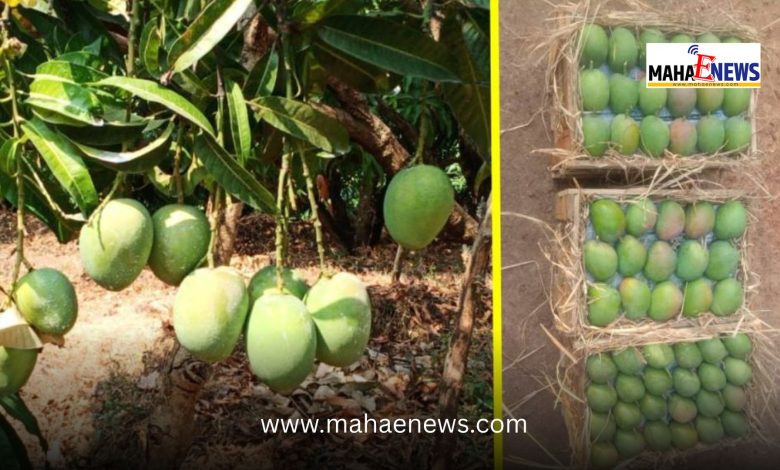
Ratnagiri: Mango growers in the Konkan region are increasingly worried as the ongoing conflict in several Gulf countries threatens the export of Alphonso mangoes. Farmers fear that if the war situation continues, it could directly impact the export market and cause significant financial losses to orchard owners.
A large number of Indians reside in Gulf countries, and every year a substantial quantity of mangoes is exported from India to these regions. However, if the conflict does not subside soon, exports could come to a halt, creating uncertainty for growers who depend heavily on overseas demand.
Amid concerns over the export of Konkan’s famous Alphonso mangoes, the Agricultural and Processed Food Products Export Development Authority (APEDA) has clarified that there is unlikely to be any major impact on Alphonso exports. However, officials added that disruptions in air or sea transport due to the war could temporarily affect shipments.
Expected Drop in Production
This year, Alphonso mango production in the Konkan region is expected to decline by 30 to 40 percent. Similar to last year, unpredictable weather conditions have adversely affected mango orchards.
Large-scale Alphonso cultivation takes place in districts such as Ratnagiri, Sindhudurg, Raigad, Palghar and Thane. Mango cultivation is carried out across approximately 1 lakh to 1.82 lakh hectares, producing nearly 308,480 metric tonnes annually.
Export and Market Scenario
A major share of Alphonso mango exports is routed through the Vashi Agricultural Produce Market Committee in Navi Mumbai. Nearly 40 percent of total exports take place from the Vashi market alone.
Out of this, about 30 percent of the mangoes are exported to Gulf countries, including Dubai, Bahrain, Qatar, Kuwait, Saudi Arabia and Jordan. The remaining 10 percent is exported to other international markets.
Experts say that if transportation is disrupted due to the war, medium-sized mangoes meant for export may remain stuck in the domestic market. This could increase supply locally and put pressure on market prices.
Current Situation at Vashi Market
At present, the arrival of mango crates from Konkan to the Vashi market is relatively low. Around 60 to 70 crates are reaching the market daily. Of these, nearly 10 percent are from Ratnagiri district.
Currently, a box containing 5 to 7 dozen Alphonso mangoes is fetching a good price between ₹6,000 and ₹12,000 in the market.
Impact of Weather and Pest Attacks
This year, Alphonso mango orchards have also been affected by pest infestations, particularly the tudtudya pest. Due to insufficient heat during October, flowering did not occur properly, which has increased the chances of lower production.
The adverse climatic conditions have also affected cashew plantations in the Konkan region.
Arrival Will Influence Prices
According to market experts, if the arrival of mango boxes in the market exceeds one lakh crates, prices may decline due to oversupply. However, if the arrival remains limited, prices are likely to remain stable.
India’s total mango export is estimated at around 29,000 metric tonnes, of which Maharashtra contributes about 5.5 metric tonnes, while nearly 2.5 metric tonnes come from the Konkan region.
“After March 25, a large quantity of Alphonso mangoes is expected to arrive in the market at the same time. If the war continues during this period, exports may suffer. The future of Alphonso exports will largely depend on how long the conflict lasts.”
— Sanjay Pansare, Vashi Market Trader
“Mango production will be lower this year, which may cause financial losses to orchard owners. Due to lower production, fewer crates will be available even in local markets. If the war situation improves, exports to Gulf and other countries could increase, helping farmers get better prices.”
— Rajaram Patwardhan, Mango Grower, Ratnagiri