
Headline: Rain Arrives, But Monsoon Yet to Fully Set In; Weather Experts Flag Key Concern for Farmers
Despite widespread showers across parts of Maharashtra, researchers say crucial monsoon indicators are still missing, raising concerns over premature sowing decisions.
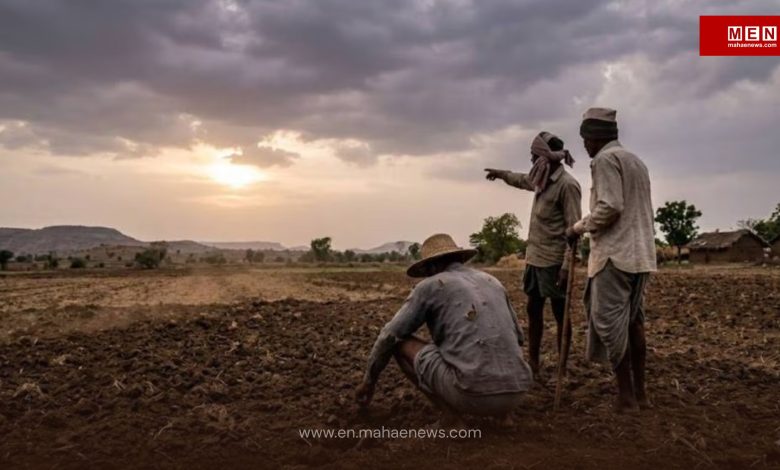
Nagpur: The India Meteorological Department (IMD) announced the arrival of the southwest monsoon in South Konkan on June 6 and its further advance into South Central Maharashtra on June 8. However, weather researchers have questioned whether the current rainfall pattern truly qualifies as monsoon rainfall, citing the absence of several key atmospheric indicators.
Follow MahaENews-X on: Follow MahaENews on Instagram
Heavy rain accompanied by thunderstorms and strong winds was recorded in several parts of the region between Sunday night and Monday morning. Sangli received 83 mm of rainfall, Dharashiv recorded 57 mm, while Solapur registered 8 mm. Despite these showers, experts argue that rainfall alone is not sufficient to confirm the onset of the monsoon.
According to meteorologists, a genuine monsoon onset requires consistent westerly winds from the Arabian Sea extending up to approximately 3,000 meters above ground level, a noticeable drop in temperatures, persistent cloud cover, and rainfall occurring throughout the day rather than only during nighttime. Researchers claim these conditions have not yet been fully observed in South Central Maharashtra.
Temperatures also remain unusually high for an active monsoon phase. Solapur recorded a maximum temperature of 38°C, while Sangli reported 35.8°C, suggesting that monsoon conditions have not been firmly established.
Experts Warn Farmers Against Hasty Sowing
The IMD has forecast further advancement of monsoon winds over the next two to three days. However, some weather experts believe rainfall activity may weaken in the coming days, while temperatures could rise and the monsoon’s progress may slow down.
This period is crucial for agricultural sowing. Experts warn that if farmers begin sowing based on the monsoon declaration and rainfall subsequently decreases, rising temperatures could adversely affect newly sown crops.
Dr. Akshay Deoras, Senior Weather Researcher at the University of Reading, UK, stated that both rainfall and wind patterns are essential for confirming monsoon onset. He explained that during a normal monsoon, winds up to around 3,000 meters above ground level originate from the Arabian Sea, cloud cover increases significantly, temperatures fall, and rainfall occurs at different times throughout the day.
According to Dr. Deoras, the winds currently affecting South Central Maharashtra are originating from the African region rather than the Arabian Sea and therefore are not directly linked to monsoon activity. He also indicated that rainfall intensity could remain subdued while temperatures stay relatively high across the state for at least the next week.
Need for Reliable Forecasts
Agriculture expert and White Gold Trust founder Gajanan Jadhav noted that the growing number of weather forecasters has created confusion among farmers. He advised farmers to rely only on credible and trusted weather forecasts and avoid making decisions based solely on isolated rainfall events.
Jadhav added that while some farmers have already begun sowing after recent storms and others have opted for dry sowing, caution is necessary. He warned that with El Niño conditions expected to influence weather patterns, rainfall could remain below normal, making it important for farmers to avoid rushing into sowing operations.
Follow MahaENews-X on: Follow MahaENews on Instagram