Maharashtra Economy Expected to Grow 7.9% in 2025–26; Per Capita Income to Reach ₹3.47 Lakh
Economic Survey highlights strong growth in services, industry and infrastructure investment across the state
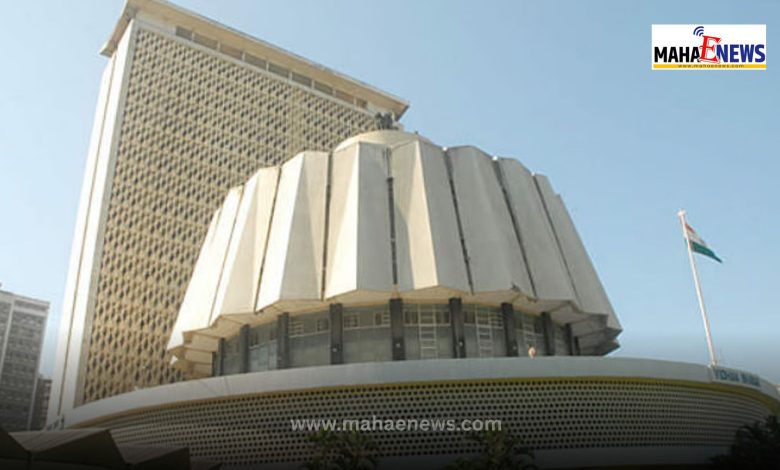
The economy of Maharashtra is expected to grow by 7.9 percent in the financial year 2025–26, according to the latest Maharashtra Economic Survey 2025–26 presented in the state legislature. The report notes that balanced growth in agriculture, industry and services, along with major investments in infrastructure and reforms to improve ease of doing business, have strengthened the state’s economic competitiveness.
The survey was presented in the state assembly by Minister of State for Finance and Planning Ashish Jaiswal, while it was tabled in the legislative council by Minister of State Pankaj Bhoyar.
According to the report, Maharashtra’s nominal Gross State Domestic Product (GSDP) for 2025–26 is expected to reach ₹51,00,597 crore, while the real GSDP is projected at ₹28,82,699 crore. The state’s per capita income is estimated at ₹3,47,903, significantly higher than the national average of ₹2,19,575.
Highest contribution to India’s GDP
Maharashtra continues to remain the largest contributor to India’s economy. As per the first revised estimates for 2024–25, the state accounts for 14 percent of India’s GDP, the highest share among all states. Investments in roads, metro projects, ports, airports, industrial corridors and logistics infrastructure have accelerated development across the state.
Sector-wise growth projections
The report also outlines expected growth across key sectors in 2025–26:
-
Agriculture and allied activities: 3.4% growth
-
Industry: 5.7% growth
-
Services sector: 9.0% growth
The services sector is expected to remain the biggest driver of Maharashtra’s economy.
Inflation remains under control
Between April and December 2025, the average Consumer Price Index (CPI) stood at 401.8 in rural areas and 376.7 in urban areas. During this period, inflation was recorded at 2.0 percent in rural regions and 1.5 percent in urban areas. The report states that GST rate adjustments on essential commodities have helped stabilize prices.
Expansion of public distribution system
By December 2025, the state had 270.84 lakh ration card holders and 51,636 fair price shops operating under the public distribution system. Under the Shiv Bhojan Scheme, more than 4.09 crore subsidised meals had been served by November 2025.
Progress in social sector
Under the Pradhan Mantri Awas Yojana, around 8.75 lakh houses in urban areas and 16.05 lakh houses in rural areas have been completed. The Jal Jeevan Mission has also expanded tap water connectivity to over 90 percent of households in the state.
Under the Swachh Bharat Mission, 34,584 out of 40,247 villages have been declared ODF+, while several cities have been recognised as ODF, ODF+, ODF++ and Water+.
Revenue and fiscal position
For the financial year 2025–26, the state’s revenue receipts are expected to reach ₹5,60,964 crore, including ₹4,77,400 crore in tax revenue and ₹33,052 crore in non-tax revenue. The fiscal deficit is projected to remain at 2.7 percent of GSDP, within the targeted limit.
Agriculture sector outlook
During the 2025 monsoon season, Maharashtra received 109.1 percent of normal rainfall. Around 157.27 lakh hectares were sown during the kharif season. While production of cereals, sugarcane and cotton is expected to increase, pulses and oilseed output may decline.
The government has approved ₹9,022.38 crore in compensation for 116.40 lakh farmers affected by unseasonal rains and excessive rainfall. Under the solar agriculture pump scheme, 7.37 lakh solar pumps had been installed in the state by December 2025.
Industry and investment
Under the Maharashtra Industry, Investment and Services Policy 2025, the state aims to attract large-scale investments. By December 2025, 63.85 lakh micro, small and medium enterprises (MSMEs) had been registered, generating employment for more than 2.52 crore people.
Maharashtra also leads the country in foreign direct investment (FDI) with a 31 percent share, and accounts for 17 percent of India’s startups.
Energy and infrastructure
As of March 31, 2025, Maharashtra’s installed power generation capacity stood at 41,019 MW, with renewable energy capacity steadily increasing. The state currently ranks third in India in renewable energy capacity.
Transport and connectivity
By March 2025, the total road network in the state had expanded to 3.45 lakh km. As of January 1, 2026, around 528 lakh vehicles were registered in the state.
The Mumbai–Nagpur Samruddhi Expressway, officially known as the Hindu Hrudaysamrat Balasaheb Thackeray Maharashtra Samruddhi Mahamarg, became fully operational in June 2025. Meanwhile, Mumbai Metro Line 3 (Colaba–Bandra–SEEPZ) started full operations in October 2025 and currently carries an average of over 78,000 passengers daily.
Tourism and aviation growth
According to the Ministry of Tourism tourism data compendium, Maharashtra ranked first in India in foreign tourist arrivals in 2024. Additionally, flight operations began from the Navi Mumbai International Airport in December 2025, further boosting connectivity and tourism.