
If Private Institutions Can Care for Elephants, Why Can’t the Government?
The transfer of elephant Omkar to a private sanctuary raises deeper questions about the State’s responsibility, capability, and commitment to wildlife management.
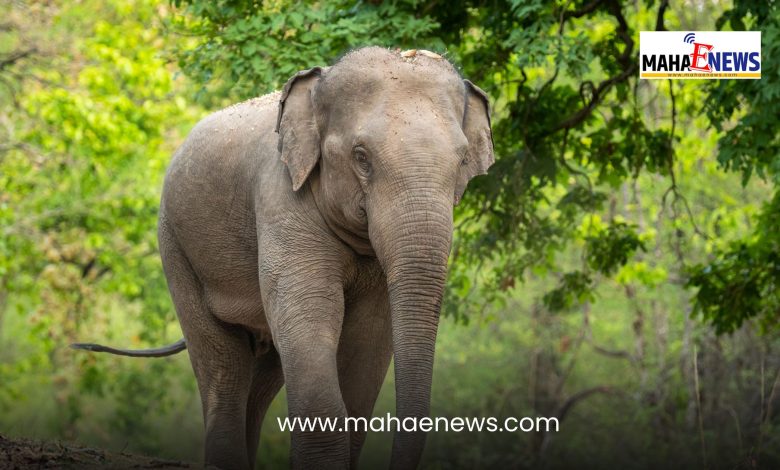
The ongoing controversy surrounding Omkar, the elephant that migrated from Karnataka to Maharashtra, has once again opened a debate on the State’s ability to manage wildlife. After farmers reported crop damage due to Omkar’s movement, the Maharashtra Government decided to shift him to the ‘Vantara’ facility in Gujarat. Although a petition was filed in the Bombay High Court opposing this decision, the court upheld the State Government’s stand. Omkar will now be transported to Gujarat.
But this decision triggers a larger, more unsettling question: Has the State become incapable of caring for its own wildlife? If a government—armed with all legal authority, resources, and administrative machinery—needs to rely on private organizations for the welfare of one elephant, then what does this say about the effectiveness of these systems?
This issue is not merely about the welfare of a wild animal. It exposes deeper concerns regarding the State Government’s capacity, accountability, and adherence to the Public Trust Doctrine, which states that natural resources must be safeguarded by the State for the benefit of its citizens.
Where is the system failing?
The fact that a wild elephant must be transferred out of the State to ensure safety and care points to systemic weaknesses:
-
Inadequate wildlife management infrastructure
-
Insufficient trained manpower for monitoring and rescue
-
Lack of long-term rehabilitation plans for conflict-prone animals
-
Over-dependence on private institutions for expertise and facilities
If the State machinery cannot manage the needs of a single elephant, how can it be expected to safeguard vast forests, biodiversity, and endangered species?
The transfer of Omkar may resolve an immediate local issue, but it raises a fundamental question: Is the government slowly relinquishing its role as a guardian of wildlife? And if so, what does that mean for the future of conservation?