Delimitation Link to Women’s Reservation Questioned by Supriya
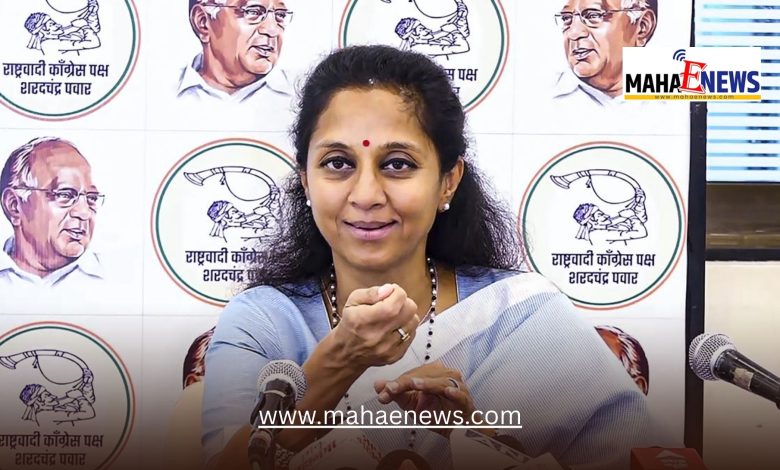
Mumbai: A political face-off has intensified over the implementation of the Women’s Reservation law, as NCP MP Supriya Sule raised serious questions about the Centre’s delay in enforcing the legislation, popularly known as the Nari Shakti Vandan Act.
The controversy erupted after Maharashtra Chief Minister Devendra Fadnavis accused opposition parties of being “anti-women” during a press conference. He also alleged that opposition leaders were “changing colors like chameleons” on the issue.
Responding strongly, Sule dismissed the allegations and challenged the government’s narrative. She emphasized that merely branding the opposition as anti-women would not address the real issue — the delayed implementation of a law already passed by Parliament.
Also Read | US Navy Seizes Iranian Cargo Ship ‘Touska’ in Gulf of Oman
Sule pointed out that the Women’s Reservation Bill was unanimously approved in the Lok Sabha on September 20, 2023, followed by its passage in the Rajya Sabha on September 21. The bill received Presidential assent on September 28, 2023, making it a law. Despite this, its implementation remains pending even in 2026.
“The question is simple — if the law has already been passed, why has it not been implemented yet?” Sule asked. She further questioned the government’s justification linking the rollout of women’s reservation to delimitation.
“What is the connection between delimitation and women’s reservation? Why should women wait for a separate process when 33% reservation in 543 Lok Sabha seats can be implemented immediately?” she said.
Sule also alleged that leaders within the NDA alliance were speaking in a coordinated manner based on centralized instructions. While acknowledging Fadnavis as a well-read and capable leader, she hinted that his statements might be influenced by directives from the central leadership.
She reiterated the opposition’s demand for immediate implementation of 33% reservation for women in Parliament and questioned why promises such as increasing seats by 50% in each state were not included in the legislation.
Concluding her remarks, Sule expressed readiness for an open discussion with the Chief Minister, stating she was willing to meet at any time and place to debate the issue.
The debate over women’s reservation, delimitation, and political accountability continues to heat up, raising critical questions about governance, policy execution, and gender representation in Indian politics.
Follow MahaENews-X on: Follow MahaENews on Instagram