
What Is a Hamstring Injury? Causes, Recovery & Treatment
From Rohit Sharma to Varun Chakaravarthy and Harshit Rana, hamstring injuries continue to trouble cricketers. Here's why recovery often takes weeks or even months.
What Is a Hamstring Injury? Causes, Recovery & Treatment Explained
Hamstring injuries have once again become a major talking point in Indian cricket after Varun Chakaravarthy and Harshit Rana were ruled out during the England tour due to hamstring problems. Earlier, Rohit Sharma also suffered a similar injury during the IPL, highlighting one of the most common fitness concerns faced by professional cricketers.
Follow MahaENews-X on: Follow MahaENews on Instagram
A hamstring injury occurs when one or more of the three muscles located at the back of the thigh are stretched beyond their limit or partially or completely torn. These muscles play a crucial role in sprinting, jumping, sudden acceleration and quick changes in direction, making them highly vulnerable in fast-paced sports like cricket.
According to cricket injury data, fast bowlers are at the highest risk of suffering hamstring injuries because of the explosive movements involved in their bowling action. However, with the rise of T20 cricket, batters have also become increasingly prone to the injury due to frequent sprinting between the wickets and aggressive running.
In most cases, players suffer a hamstring strain or partial muscle tear, allowing them to return within a few weeks with proper rehabilitation. However, in rare cases where the muscle tears completely away from the bone, known as Hamstring Origin Avulsion, surgery may be required, keeping players out of action for several months.
Why Do Hamstring Injuries Occur?
Sports medicine experts believe that most hamstring injuries are preventable if proper conditioning and recovery protocols are followed. Several risk factors contribute to the injury, including inadequate warm-up, muscle tightness, fatigue, muscle weakness, poor running mechanics and previous hamstring injuries.
Weak glute muscles, poor core strength and spinal issues can also increase pressure on the hamstrings, making athletes more vulnerable during high-intensity movements.
Types of Hamstring Injuries
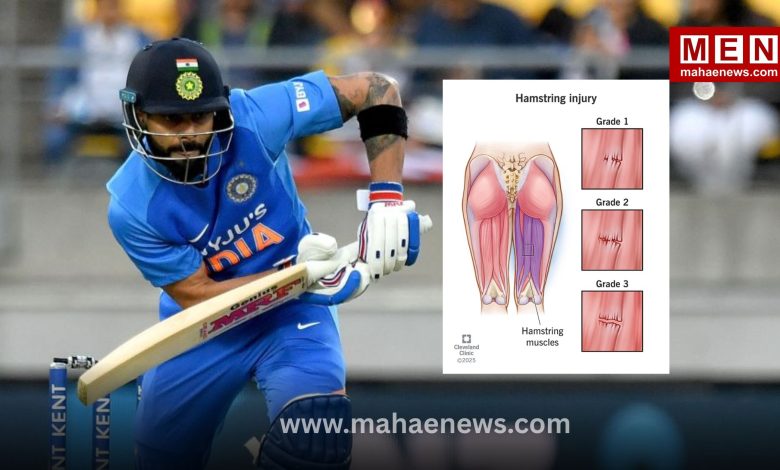
Hamstring injuries are classified into three grades depending on their severity.
Grade 1 (Mild Strain): Minor muscle stretching with a recovery period of 2 to 4 weeks.
Grade 2 (Partial Tear): Partial muscle tear requiring 6 to 12 weeks of rehabilitation.
Grade 3 (Complete Tear): Complete muscle rupture, often requiring surgery and 3 to 6 months or more for recovery.
Treatment and Recovery
The first few hours after a hamstring injury are critical. Doctors recommend following the R.I.C.E. principle immediately after the injury—Rest, Ice, Compression and Elevation—to reduce pain and swelling.
Early consultation with a physiotherapist is equally important. Rehabilitation focuses not only on healing the injured muscle but also on identifying the root cause of the injury. Strengthening weak muscles, correcting running technique, improving flexibility and building core stability significantly reduce the chances of the injury recurring.
With proper treatment and structured rehabilitation, most athletes can safely return to competitive cricket while lowering the risk of future hamstring injuries.