
Supreme Court: Right to Worship Cannot Be Linked to Any Specific Location; Petition for Namaz in Chennai Military Mosque Dismissed
The Supreme Court observed that religious worship cannot be tied to a single place while upholding the Madras High Court’s decision dismissing a plea to allow civilians to offer Namaz inside the Masjid-e-Alishan located in a restricted military zone in Chennai.
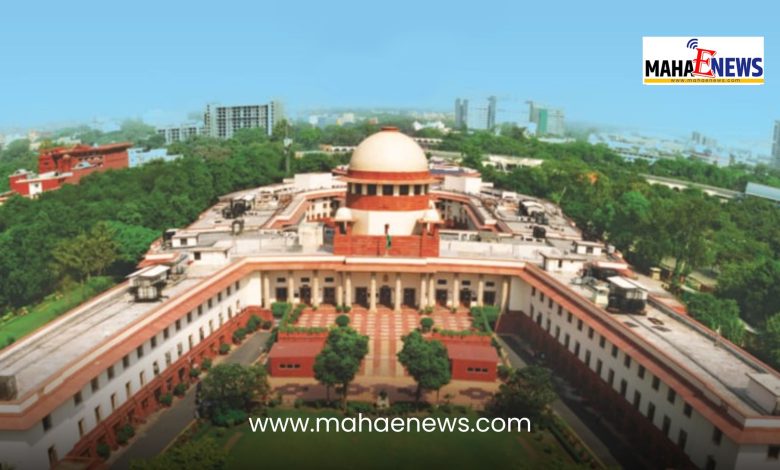
The Supreme Court has stated that the right to practise religion or offer worship cannot be confined to a specific place, while rejecting a plea requesting civilian access to offer Namaz inside a mosque situated in a military area in Chennai.
A petition was filed seeking permission for civilians to pray at Masjid-e-Alishan, which was freely accessible to the public from 1877 to 2002. According to the petitioners, the mosque never posed any security threat during that period. However, since 2002, civilian access has been barred due to security concerns.
Earlier this year, in April 2025, the Madras High Court dismissed the petition, stating that civilians had multiple alternative mosques available in the area for offering Namaz and that the court could not issue directions to open a restricted defence property for public use.
Challenging this order, the petitioners approached the Supreme Court.
During the hearing, Senior Advocate M.R. Shamshad argued that the mosque had historically remained open to the public and that its location on defence land should not deprive citizens of their right to pray there. He questioned why worship at this particular mosque should be prohibited when it had posed no security issues earlier.
However, the bench of Justice Vikram Nath and Justice Sandeep Mehta rejected the arguments, observing:
-
“Can worship be tied to only one particular place?”
-
“Many alternatives are available.”
-
“A petitioner cannot insist on entering a prohibited defence area merely because a mosque stands there.”
The court emphasized that security considerations within a military establishment must be left to the armed forces. As the mosque lies inside a military residential zone, security restrictions were justified.
Upholding the High Court’s decision, the Supreme Court dismissed the petition.