
Fadnavis Blames Heatwave, Not Smart Meters for High Bills
CM Devendra Fadnavis says rising temperatures and delayed monsoon—not smart meters—are driving higher electricity bills across Maharashtra.
Fadnavis Blames Heatwave, Not Smart Meters for High Bills
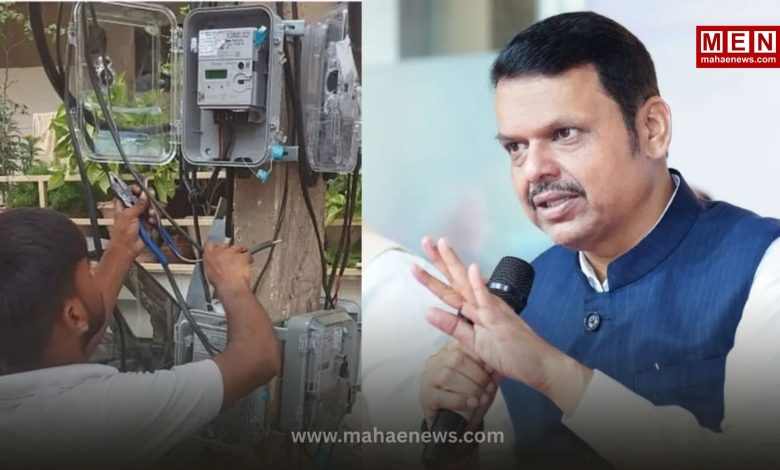
Maharashtra Chief Minister Devendra Fadnavis has rejected allegations that smart meters are responsible for the state’s rising electricity bills, claiming that extreme heat, climate change, and a delayed monsoon are the real reasons behind higher power consumption and increased bills.
Follow MahaENews-X on: Follow MahaENews on Instagram
Speaking in the Maharashtra Legislative Assembly, Fadnavis responded to concerns raised by legislators who alleged that consumers were receiving inflated electricity bills after the installation of smart meters and that several areas were experiencing power cuts.
The Chief Minister clarified that there is no load shedding anywhere in the state. However, he admitted that some rural consumers connected to agricultural feeders receive electricity only during specific hours.
“Around 76% of agricultural feeders are supplied electricity during the daytime. Their power supply is switched off at night, which creates the impression of load shedding among consumers,” Fadnavis said.
Addressing concerns over smart meters, the Chief Minister stated that 1.23 crore smart meters have been installed across Maharashtra. According to him, 3.92 lakh complaints were received from consumers, but only 210 complaints were found to be genuine after verification.
“Consumers using smart meters receive concessions on electricity consumed during daytime. Despite complaints of higher bills, smart meters are not the reason behind increased electricity charges,” he asserted.
Fadnavis claimed that climate change, rising temperatures, and prolonged heatwaves have significantly increased electricity consumption, resulting in higher bills.
According to government data, Maharashtra’s peak electricity demand increased from 28,000 MW in May last year to 33,000 MW this year, marking a rise of nearly 5,000 MW.
Citing an Energy Department study conducted in Badlapur, the Chief Minister said temperatures increased from 38°C in May 2025 to 43°C in May 2026, while the monsoon arrived almost one month late, leading to higher use of cooling appliances.
He also explained the state’s electricity tariff structure, stating that electricity is subsidized for consumption of up to 300 units. Once consumption exceeds that limit, the per-unit tariff increases, and bills rise further for consumers using more than 500 units.
Fadnavis maintained that the increase in electricity bills is primarily linked to higher power consumption caused by extreme weather conditions, rather than the installation of smart meters.
Fadnavis Hits Back Over ‘Missing Link’ Allegations
During the Assembly session, the Chief Minister also criticized reports claiming that ₹7,000 crore had been wasted on the state’s Missing Link project.
“Spreading false reports and rumours that ₹7,000 crore has gone down the drain when nothing has happened to the Missing Link project is an insult not just to the government, but to Maharashtra itself,” Fadnavis said.
He added that his earlier remarks on the project had clearly unsettled his political opponents.
Follow MahaENews-X on: Follow MahaENews on Instagram