Why PM Modi Chose Pralhad Joshi as Education Minister
Following Dharmendra Pradhan’s resignation, senior BJP leader Pralhad Joshi takes charge of the Education Ministry as the Centre seeks stability amid growing pressure over exam reforms.
Why PM Modi Chose Pralhad Joshi as Education Minister
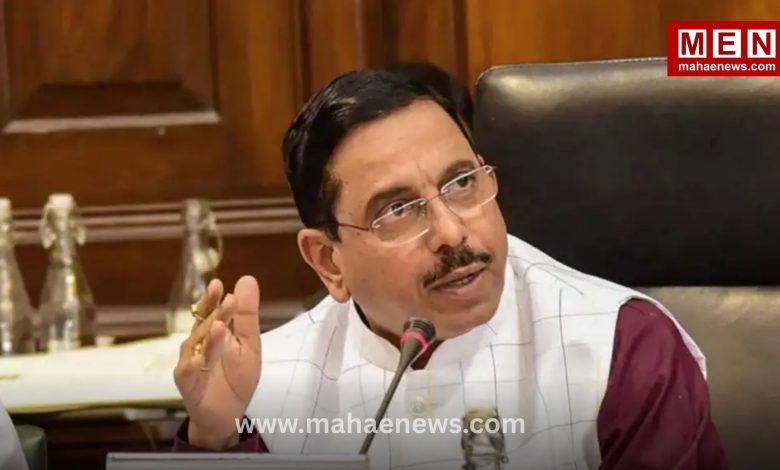
Following the resignation of Dharmendra Pradhan, Prime Minister Narendra Modi has entrusted senior BJP leader and Union Minister Pralhad Joshi with the additional charge of the Ministry of Education, a move widely seen as an effort to restore stability and confidence in the country’s education system.
Follow MahaENews-X on: Follow MahaENews on Instagram
Already serving as the Union Minister for Consumer Affairs, Food and Public Distribution, Joshi will now oversee the Education Ministry at a time when it is facing intense scrutiny over examination transparency, entrance tests and education reforms.
A Veteran BJP Leader with Strong Parliamentary Experience
Pralhad Joshi is among the Bharatiya Janata Party’s most experienced leaders from Karnataka. A five-time Member of Parliament from Dharwad, he secured his fifth consecutive Lok Sabha victory in 2024 by defeating Congress candidate Vinod Asooti by more than 97,000 votes.
Joshi completed his Bachelor’s degree from Karnatak University, Dharwad, after studying at K.S. Arts College, Hubballi. He first gained political prominence during the Idgah Maidan movement in Hubballi between 1992 and 1994.
Before entering national politics in 2004, Joshi was associated with the Rashtriya Swayamsevak Sangh (RSS) and later became an MLA in Karnataka in 1996. He also served as the Karnataka BJP State President between 2014 and 2016.
Why Did PM Modi Choose Pralhad Joshi?
Political observers believe Joshi’s appointment is aimed at bringing administrative stability to the Education Ministry following weeks of political turbulence.
Having previously served as the Union Minister of Parliamentary Affairs, Joshi possesses extensive experience in managing parliamentary debates, resolving political disagreements and ensuring smooth legislative functioning. His ability to handle complex political situations is considered one of the key reasons behind his appointment.
With Parliament witnessing heated confrontations over education-related issues, the government appears to have opted for an experienced administrator capable of managing both political and administrative challenges.
Major Challenges Await the New Education Minister
The Education Ministry currently faces several critical issues, including restoring transparency in examination systems, improving the conduct of national entrance examinations, implementing the National Education Policy (NEP) and accelerating pending education reforms.
As Joshi assumes the additional portfolio, all eyes will be on the Centre’s next steps to rebuild public confidence in India’s education system.
Government sources also indicate that a future Cabinet reshuffle could result in the appointment of a full-time Education Minister in the coming weeks.