SC Questions Reservation Benefits for IAS, IPS Children
Supreme Court’s sharp remarks on reservation benefits for children of top bureaucrats have reignited a nationwide debate over creamy layer rules, social justice and equal opportunity.
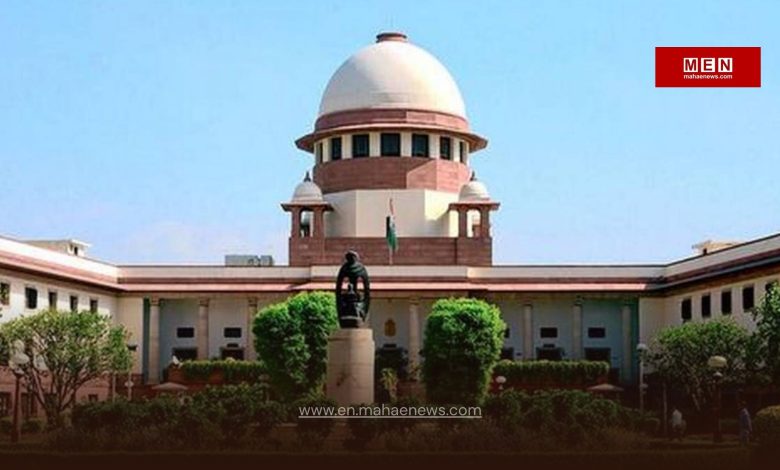
New Delhi | India’s reservation debate has once again taken center stage after the Supreme Court raised serious questions over whether children of senior bureaucrats such as IAS, IPS and IFS officers should continue receiving reservation benefits under backward class categories.
During recent observations, the apex court questioned why families that have already achieved significant social and economic progress continue to claim reservation benefits instead of allowing more deprived communities to access those opportunities. The remarks have triggered fresh political, legal and social discussions across the country over the original purpose of reservation.
The court observed that several families have now reached positions of influence and stability through reservation policies over generations. It questioned whether such privileged sections within reserved categories should voluntarily step aside so that benefits can reach citizens who remain socially and economically marginalized.
OBC Creamy Layer Rules Explained
The legal framework for Other Backward Classes (OBC) reservation was clearly defined by the Supreme Court in the landmark Indra Sawhney case of 1992, where the concept of “creamy layer” was introduced.
In March 2026, the Supreme Court once again clarified that creamy layer identification is not based solely on income. The social status and official position of parents also play a major role.
Also Read | NEET Paper Leak: 11th Accused Held in Pune
As per Department of Personnel and Training guidelines, children of Group A/Class 1 officers — including IAS, IPS and IFS officers — are treated as falling under the creamy layer category from the beginning. Such candidates are not eligible for the 27 percent OBC reservation quota.
For families working in private or unorganized sectors, the economic criterion applies. If parental annual income exceeds ₹8 lakh continuously for three years, the candidate is categorized under creamy layer and loses eligibility for OBC reservation benefits. However, the candidate’s personal income and agricultural earnings are excluded from this calculation.
SC/ST Reservation Works Differently
Unlike OBC reservation, reservation for Scheduled Castes (SC) and Scheduled Tribes (ST) was not created merely to address economic inequality. It was introduced to fight centuries of social discrimination, untouchability and exclusion.
Because of this constitutional objective, the ₹8 lakh creamy layer condition does not currently apply to SC/ST reservation at the entry level.
However, a recent seven-judge Constitution Bench judgment has significantly changed the legal conversation around SC/ST reservation. The Supreme Court ruled that state governments have the constitutional authority to create sub-classifications within SC and ST categories.
Most judges in the Constitution Bench also expressed the view that states should develop mechanisms to identify a creamy layer within SC/ST communities so that reservation benefits can genuinely reach the most deprived sections.
EWS Reservation and Economic Limits
The 10 percent reservation for Economically Weaker Sections (EWS) in the general category operates on an entirely different principle. The Supreme Court has upheld its constitutional validity, emphasizing economic disadvantage as the central criterion.
To qualify under EWS, the annual family income must remain below ₹8 lakh. Strict limits on agricultural land ownership and residential property holdings also apply.
Reservation for Persons with Disabilities
Under the Rights of Persons with Disabilities framework, the government provides 4 percent horizontal reservation in government jobs for persons with disabilities.
Candidates must have at least 40 percent disability to qualify. This reservation is based entirely on physical or mental disability and has no connection with social or economic status.
Domicile and Management Quotas
Apart from constitutional reservation categories, educational institutions also follow local domicile quotas. State-funded and professional colleges can reserve up to 85 percent seats for local residents. The Supreme Court has upheld such provisions as constitutionally valid, citing the responsibility of states to protect local educational interests.
Management quota seats, usually around 15 percent, are filled by institutions using their own admission mechanisms and higher fee structures. However, the Supreme Court has repeatedly stated that minimum merit and eligibility standards cannot be compromised even under management quota admissions.
The Supreme Court’s latest observations have once again opened a politically sensitive debate over whether reservation should continue benefiting already empowered sections or be more sharply targeted toward the most deprived communities.
Follow MahaENews-X on: Follow MahaENews on Instagram