
Maharashtra Issues New Rules for Custodial Death Probes
State government mandates CCTV footage, video-recorded post-mortems and scientific evidence to ensure transparent investigations into custodial deaths.
Maharashtra Issues New Rules for Custodial Death Probes
In a major step towards ensuring transparency and accountability in custodial death investigations, the Maharashtra Government has introduced a comprehensive set of guidelines mandating the use of scientific and digital evidence in every case. The new framework has been prepared in accordance with the Bharatiya Nyaya Sanhita (BNS), Bharatiya Nagarik Suraksha Sanhita (BNSS), Bharatiya Sakshya Adhiniyam (BSA) and directions issued by the Supreme Court.
Follow MahaENews-X on: Follow MahaENews on Instagram
One of the biggest changes is the expanded definition of custodial death. Under the revised rules, a death will be treated as a custodial death not only when a person dies inside a police lock-up but also if the individual dies while under indirect police custody during interrogation or investigation.
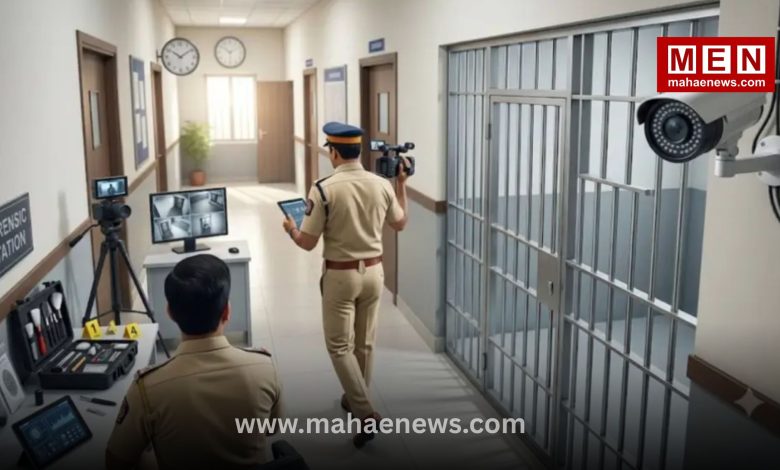
The government has made it mandatory for investigators to rely on scientific, forensic and digital evidence. CCTV footage from police stations must be preserved, while the entire post-mortem process must be audio and video recorded to strengthen transparency and eliminate doubts during investigations.
As per the new guidelines, custodial death cases in Mumbai will be investigated by the Crime Branch, while cases from the rest of Maharashtra will be handled by the State Crime Investigation Department (CID).
Police stations have also been directed to immediately secure the crime scene after a custodial death, register an accidental death report through the Crime and Criminal Tracking Network & Systems (CCTNS), and preserve all CCTV recordings from the police station and lock-up. Authorities must also inform the National Human Rights Commission (NHRC), the State Human Rights Commission (SHRC) and the Civil Rights Protection Department within 24 hours of the incident.
The guidelines further require an executive magistrate to conduct a panchnama with multi-angle video recording while ensuring the presence of the deceased’s family members. The post-mortem examination must be carried out by a panel of at least three expert doctors, and the entire procedure must be audio and video recorded.
Investigators have also been instructed to conduct forensic examination of the crime scene, prepare digital panchnamas through the e-evidence system and reconstruct the crime scene wherever necessary.
To reduce the possibility of custodial deaths, the government has introduced preventive measures, including compulsory medical examinations of every arrested person, immediate hospitalisation of accused persons injured by public assault before being placed in custody, and mandatory medical check-ups every 48 hours for individuals kept in police custody.
The guidelines also strengthen surveillance measures by directing every police station to install CCTV cameras with night vision and audio recording at entry and exit points, interrogation rooms, lock-ups, corridors and surrounding areas. CCTV footage must be preserved for at least 18 months, and any malfunction in the surveillance system must be reported immediately to senior officers. Separate CCTV monitoring committees will also function at the state and district levels.
The government has retained financial assistance for the families of victims. If a custodial death is found to have resulted from police negligence, the legal heirs will receive ₹1 lakh as compensation. If a criminal case is registered against the concerned police personnel, the compensation will increase to ₹1.5 lakh.