
US Rejects Iran’s Hormuz Deal Claims
White House Dismisses Iran’s “Fake Draft” Claims; Trump Warns No Rush on Nuclear Deal Amid Rising Gulf Tensions
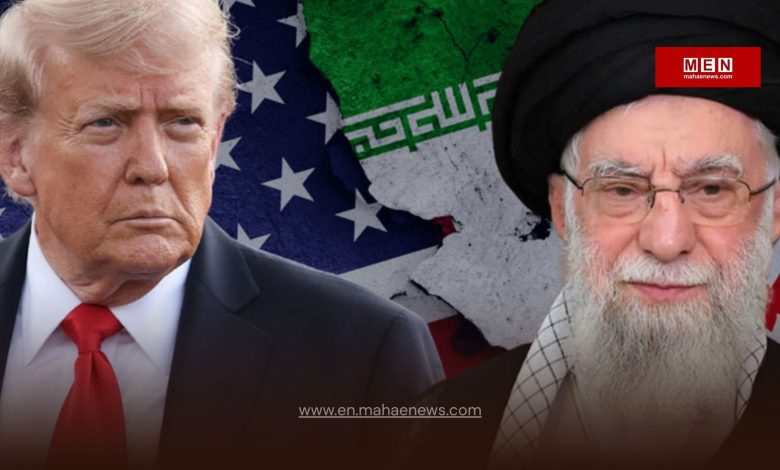
US Slams Iran Over “Fake” Peace Deal Claims
The growing tension between the United States and Iran has intensified once again after the White House strongly rejected Tehran’s claims regarding a proposed peace agreement and the reopening of the Strait of Hormuz. While Iranian state media projected optimism over an alleged draft agreement, Washington categorically denied every claim and termed the reports “completely fabricated.”
Despite multiple extensions of the temporary ceasefire period, the geopolitical situation between both nations remains highly volatile. Although diplomatic channels are reportedly active, the possibility of fresh escalation in the Middle East continues to loom large.
Iranian media had earlier claimed that former US President Donald Trump instructed American officials to move forward with a final peace agreement aimed at restoring stability in the Strait of Hormuz — one of the world’s most critical oil shipping routes. Reports also suggested that Iran had shown willingness to normalize commercial maritime traffic within 30 days and coordinate operations with Oman.
Also Read | US-Iran Peace Talks Continue Despite Fresh Airstrikes
However, the White House has now shattered those claims.
White House Calls Iranian Reports “Completely False”
Responding sharply to the Iranian narrative, the White House issued a strong clarification rejecting all reports related to the so-called agreement draft.
“This report from Iranian state media is not true, and the draft they released is entirely fabricated. No one should trust what Iranian state media is broadcasting because facts are what matter,” the White House stated.
The US administration also denied reports suggesting that Washington was preparing to remove military restrictions around the Strait of Hormuz or scale back strategic deployment in the Gulf region.
What Iran Claimed About the Deal
According to Iranian media outlets, the proposed agreement reportedly focused on economic and defense cooperation while prioritizing maritime stability in the Gulf. Tehran claimed that both sides were discussing mechanisms to ease tensions and restore unrestricted trade movement through Hormuz.
Iranian reports further alleged that:
- Iran was ready to ensure smooth commercial shipping within 30 days.
- Oman would help coordinate maritime operations.
- The United States was considering reducing military pressure in nearby regions.
- Discussions were progressing toward a broader diplomatic understanding.
This report from Iranian controlled media is not true and the MOU they “released” is a complete fabrication. Nobody should believe what Iranian state media is putting out. FACTS MATTER. https://t.co/agpTnBSgKu
— Rapid Response 47 (@RapidResponse47) May 27, 2026
But all these assertions have now been publicly denied by Washington, dealing a major diplomatic embarrassment to Tehran.
Trump Warns Officials Against Rushing Any Deal
Donald Trump also made it clear that his administration would not repeat what he described as the “worst deal ever made” — referring to the Obama-era Iran nuclear agreement.
“One of the worst deals our country ever made was the Iran nuclear deal presented by Barack Obama’s administration. This time, negotiations are completely different,” Trump said.
He further emphasized that US negotiators should avoid any haste.
“I have told my representatives not to rush into any agreement. Time is on our side. Until a deal is finalized, approved, and signed, the blockade will remain fully in place.”
Trump additionally warned that Iran must never be allowed to develop or obtain nuclear weapons.
“Iran must understand that it cannot develop or acquire nuclear bombs,” he added.
Strait of Hormuz Remains Global Flashpoint
The Strait of Hormuz continues to remain at the center of global energy security concerns. Any uncertainty in the region directly impacts international oil prices, shipping routes, and geopolitical stability.
With both Washington and Tehran presenting completely opposite narratives, uncertainty over future negotiations has deepened. While diplomatic talks may still continue behind closed doors, the latest developments reveal that mistrust between the two nations remains stronger than ever.
Follow MahaENews-X on: Follow MahaENews on Instagram